For generations, the default method for teaching spelling in Australian homes and classrooms has been the familiar "Look, Say, Cover, Write, Check" drill. On Monday, children receive a list of 10 to 20 words. Throughout the week, they stare at the letters, attempt to photograph the word into their visual memory, write it out five times, and hope they remember enough for Friday's test.
Yet parents and teachers know the frustrating aftermath: on Friday, the child might get 10 out of 10, but by Tuesday the following week, the exact same words are misspelled in their everyday creative writing. Cognitive psychology and the Science of Reading have finally explained why: the human brain was never wired to memorise words as visual pictures.
The Flaw in Rote Visual Memorisation
When a child tries to memorise a word by visual shape alone, they are relying on short-term working memory. Cognitive scientist David Share famously referred to this as an impossible mental burden: English contains hundreds of thousands of words. If each word had to be memorised like an arbitrary telephone number or barcode, literacy would collapse under its own weight.
Instead, fluent readers and spellers use an automatic cognitive process known as orthographic mapping. In orthographic mapping, the brain bonds three distinct dimensions of a word into long-term memory:
- Phonology: The sequence of spoken sounds (phonemes).
- Orthography: The matching written letters or letter groups (graphemes).
- Morphology & Semantics: The meaningful units (morphemes) and vocabulary definition.
The Power of Morphology: Unlocking Word Families
English is not purely a phonetic language; it is a morphophonemic language. This means spelling preserves meaning (morphology) even when the pronunciation changes.
Consider the word magician. If a child spells purely by sound, they might write majishan. But if they understand morphology, they recognise that the root word is magic. Because the root ends with the letter c, adding the suffix -ian naturally produces magician. The spelling preserves the family relationship, making the meaning transparent.
How Morphology Multiplies Spelling Power
When you teach a child to memorise one word, they learn one word. But when you teach a child one morpheme, they unlock hundreds of words simultaneously:
- Base: port (to carry) → transport, export, import, report, portable, porter.
- Base: dict (to speak) → dictate, predict, contradict, dictionary, verdict.
- Prefix: re- (again / back) → rewrite, rebuild, return, review, recall.
Practical Strategies for Parents and Teachers
1. Sound Out Before Writing (Segmenting)
Before a child writes a single letter, ask them to say the word slowly and count the individual sounds (not letters). For example, the word straight has 8 letters but only 5 sounds: /s/ /t/ /r/ /ai/ /t/. Identifying the long vowel sound /ai/ directs the learner to choose the grapheme aigh.
2. Use Word Matrix Building
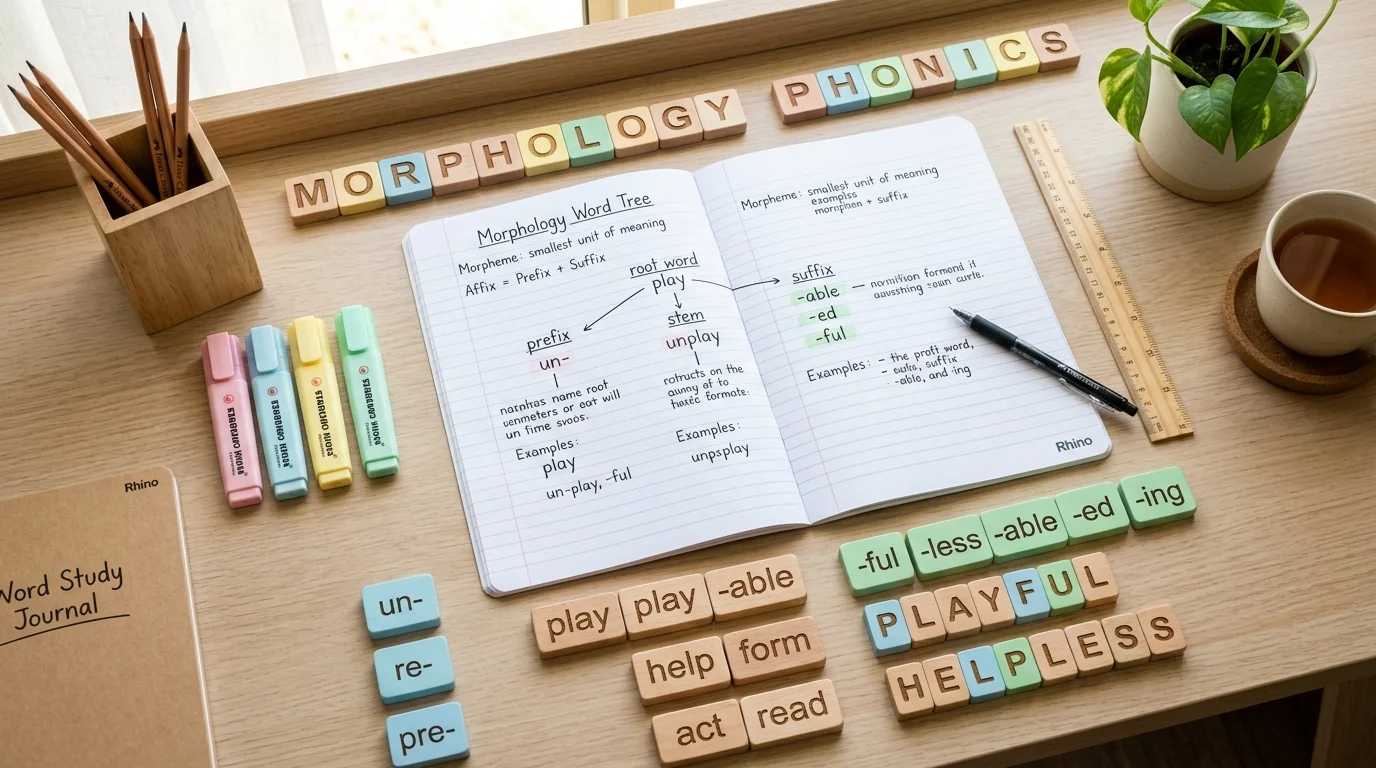
Take a common root word like play and encourage children to build as many words as possible by attaching prefixes and suffixes: re-play-ed, un-play-able, play-ful-ly, play-er. This visual understanding cements spelling conventions without rote fatigue.
3. Embrace Audio-First Retrieval Practice
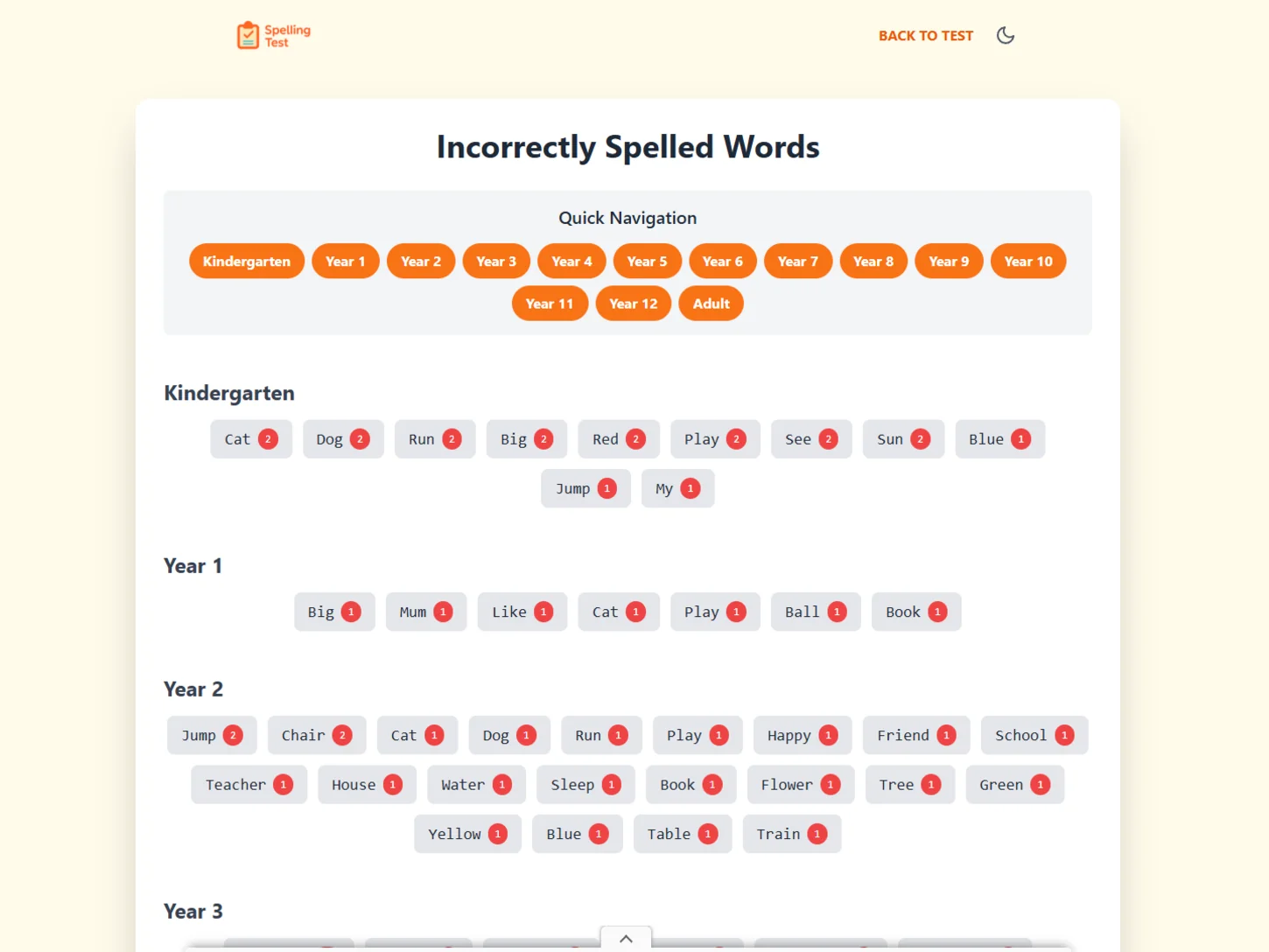
Digital spelling platforms like Spelling Test Australia engage the exact neurological pathways required for orthographic mapping: hearing authentic spoken audio, retrieving the phoneme-grapheme correspondences, and typing them out immediately.
"Spelling is not a test of memory; it is the study of language structure. When students understand how words are assembled, spelling becomes predictable, logical, and deeply rewarding."