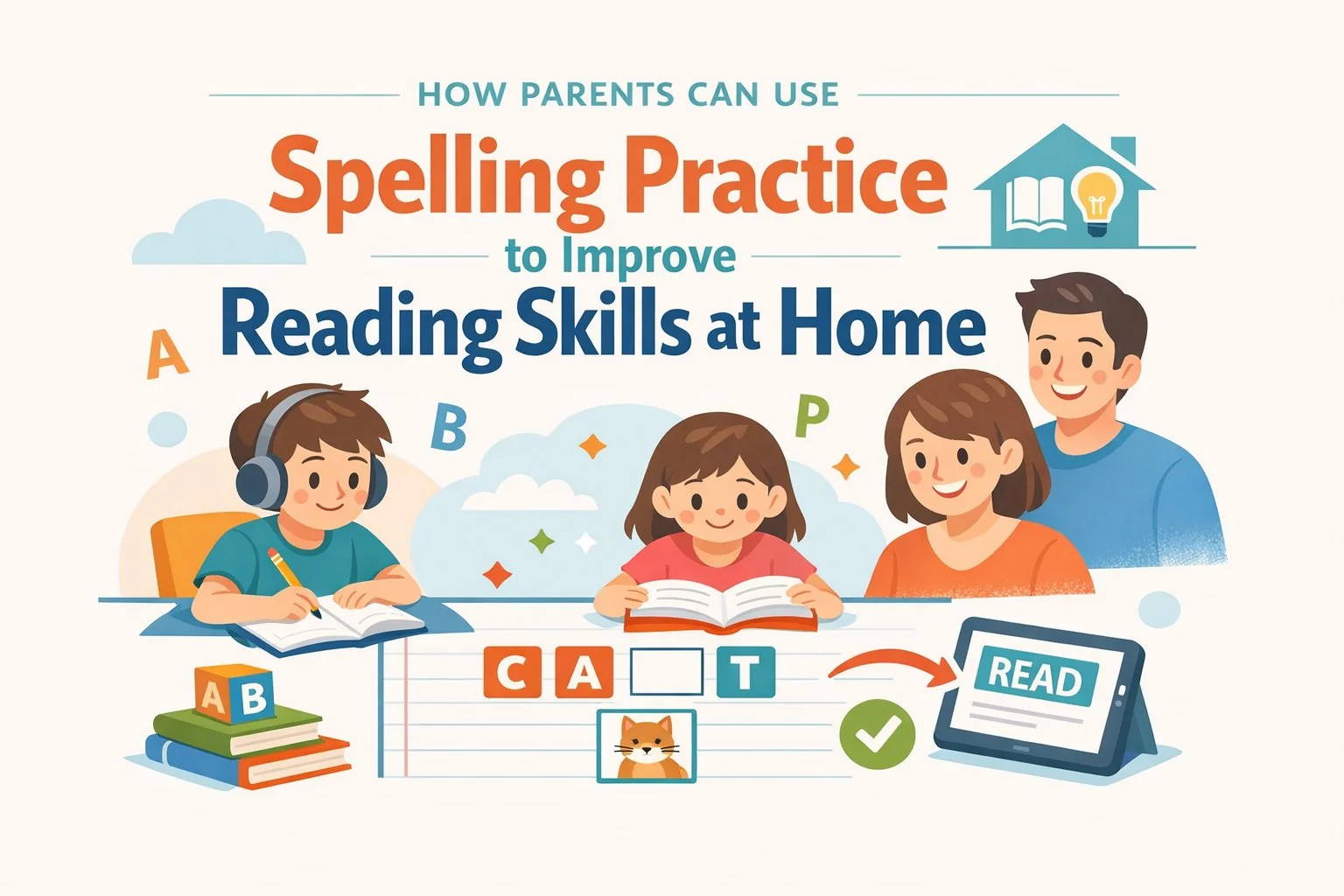
When a child is learning to read, it can be tempting to treat spelling as a separate homework task. Reading happens in books, spelling happens on a weekly list, and comprehension happens when a child answers questions about a story. In reality, these skills are deeply connected. A child who understands how words are built through an online spelling test is usually better prepared to recognise those words, read them fluently, and understand what they mean in a sentence.
For parents and teachers of children aged five to ten, this connection matters. Early literacy is not only about getting through readers or memorising spelling lists. It is about helping children build a strong word knowledge system in their brain. Spelling practice, when done well, strengthens that system. It helps children notice sounds, letters, patterns, meanings, and word families. Over time, this makes reading feel less like a guessing game and more like a confident, meaningful process.
This is especially important in the early primary years, when children are moving from sounding out simple words to reading longer sentences, richer stories, and more complex classroom texts. The stronger their spelling knowledge becomes, the more brain power they can use for comprehension, imagination, discussion, and learning.
Spelling and Reading Are Two Sides of the Same Coin
Reading and spelling may look like opposite tasks, but they rely on the same underlying knowledge. When children read, they decode. That means they look at letters and letter patterns, connect them to sounds, and blend those sounds into words. When children spell, they encode. That means they hear or think of a word, break it into sounds, and choose the letters or letter patterns that represent those sounds.
Decoding and encoding work together. A child who can read the word shop needs to recognise that the letters s, h, o, and p work together to represent the sounds in the word. A child who can spell shop needs to understand the same sound and letter relationships, just in the other direction.
For example, learning to spell rain, train, paint, and wait helps a child notice that ai can represent a long vowel sound. Once that pattern is familiar, the child is more likely to recognise similar words when reading. Instead of stopping and guessing, they can use what they know about spelling to read smoothly.
Why Word Knowledge Builds Reading Confidence
Children often lose confidence in reading when too many words feel unfamiliar. They may pause frequently, guess from pictures, skip words, or become frustrated before they reach the meaning of the text. Strong spelling knowledge helps reduce that frustration.
When children practise an interactive spelling test in a thoughtful way, they learn that English words are not random. While complex, English has dependable patterns. Children begin to see that words can be grouped by sound, spelling pattern, syllable type, meaning, and word origin:
- A child who knows the spelling pattern in cake is ready to read make, take, and snake.
- A child who understands that -ed marks past tense makes sense of jumped, looked, and played.
- A child who learns the difference between there, their, and they're learns how spelling carries meaning.
How Spelling Supports Vocabulary and Meaning
Reading comprehension depends heavily on vocabulary. Children need to know what words mean, and spelling reveals how words relate to one another morphologically. Many English words contain meaningful parts: base words, prefixes, and suffixes.
- happy, unhappy, and happiness are interconnected in meaning.
- play, played, and playing show changes in tense and form.
- help, helpful, and helpless demonstrate how suffixes alter meaning.
How Digital Tools Can Make Spelling Less Stressful
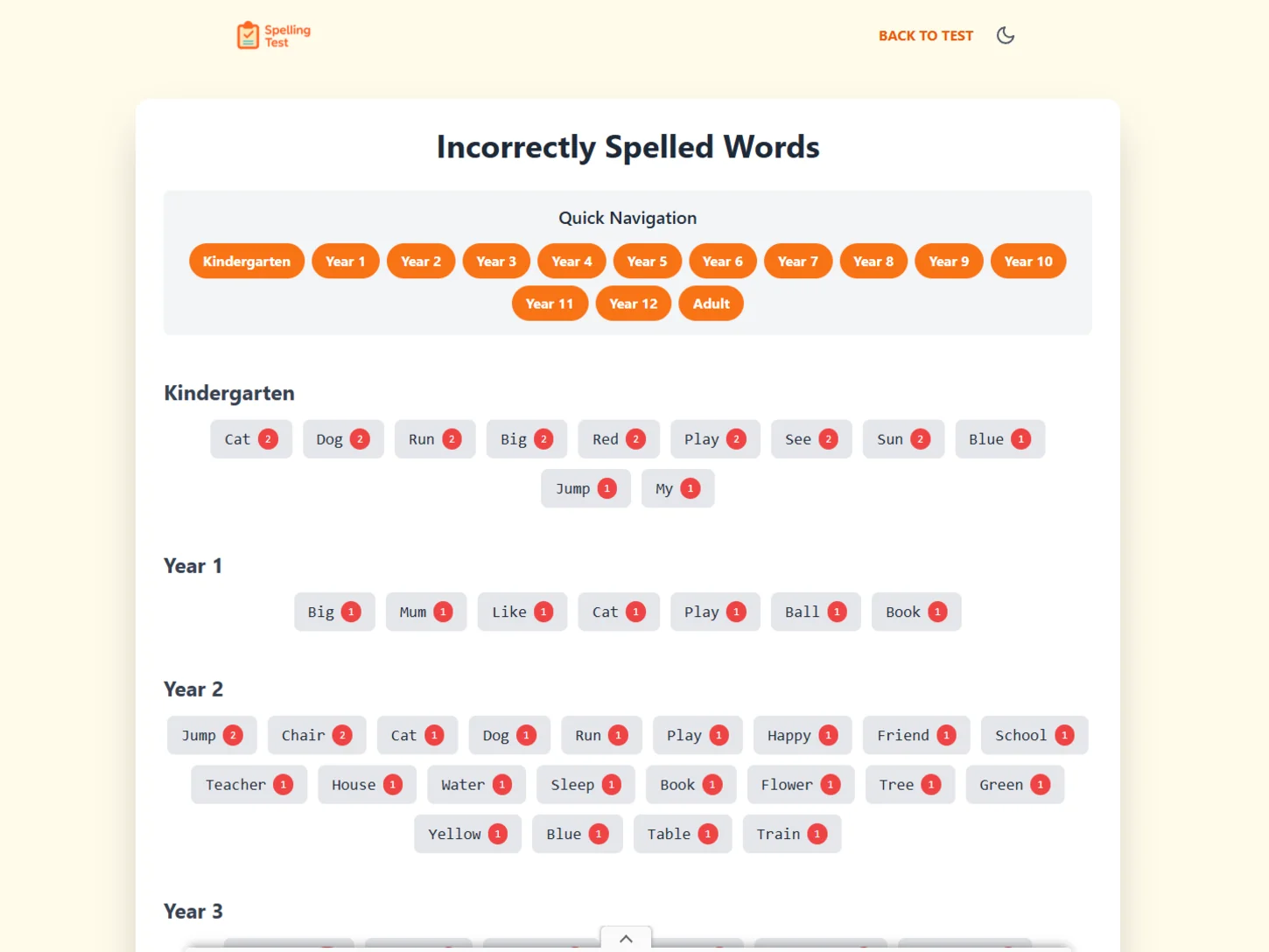
Parents are busy, teachers manage full classrooms, and children have different learning needs and confidence levels. An interactive platform such as Spelling Test makes spelling practice easier because it supports children with clear spoken audio, curriculum word lists, and progress tracking. Instead of relying solely on paper lists, children can hear words clearly, practise at their own pace, and receive support as they learn. Also check our Spelling Test for schools to see how teachers organize class lists.
Practical Ways to Practise Spelling at Home
Spelling practice at home does not need to be complicated. The best routines are short, calm, and predictable. Here are three stress-free methods:
1. Use the Say, Tap, Write, Read Routine
Choose one word from your child's list. Ask your child to say the word aloud, tap each sound on their fingers, write the word while noticing the phonics pattern, and finally read the word in a sentence. For example with float:
- Say the word: float.
- Tap the sounds: f, l, oa, t.
- Write the word while highlighting oa.
- Read a sentence: The leaf can float on the water.
2. Sort Words by Pattern
Instead of practising words in random order, ask your child to sort them into groups by vowel pattern, beginning sound, or syllable count. For example, comparing rain, paint, train against day, play, stay shows that one long vowel sound can be represented by multiple letter patterns.
3. Practise Words in Real Sentences
A spelling word becomes far more memorable when a child uses it in context. After practising a word, ask your child to create a humorous or personal sentence with it: "Dad found a blue lizard in the garden." This connects spelling directly to communicative meaning.
Common Signs Spelling May Be Impacting Reading Comprehension
Keep an eye out for these subtle indicators that weak spelling or phonics knowledge is holding back comprehension:
- The child reads very slowly and becomes fatigued quickly.
- The child guesses words from initial letters rather than reading through the word.
- The child can read aloud adequately but cannot answer basic questions about the story.
- The child avoids writing because they worry about making spelling errors.
- The child spells the same word multiple conflicting ways within the same paragraph.
"When children read with less cognitive struggle, they can focus on what reading is truly for: discovering ideas, asking questions, and unlocking imagination."
Frequently Asked Questions
How does spelling help children with reading comprehension?
Spelling helps children understand how words are built. When children recognise words accurately and automatically, they have more mental energy available to focus on story details, character motivation, and inferences.
What is orthographic mapping?
Orthographic mapping is the cognitive process the brain uses to store written words permanently in long-term memory, allowing instant sight-word recognition without sounding out letters one by one.