School spelling tests can feel simple on the surface, but for many Australian children and families they can quickly become a weekly source of stress, last minute cramming, forgotten word lists, and disappointment when the results do not match the effort. That is exactly why using an online spelling test in a consistent and practical way can make such a big difference.
A platform like Spelling Test gives students a structured, repeatable, and encouraging way to prepare before the classroom test arrives. That preparation does much more than help a child memorise a few words for Friday. It builds confidence, improves recall, supports reading and writing, and creates a calmer routine for parents and teachers who want something effective without becoming complicated.
When children prepare for spelling tests using a purpose-built tool rather than only reading words from a sheet of paper, they get a genuinely active learning experience. They hear the words spoken in clear Australian accents, type them, check their answers, repeat difficult items, and gradually strengthen the connection between sound, spelling, and meaning.
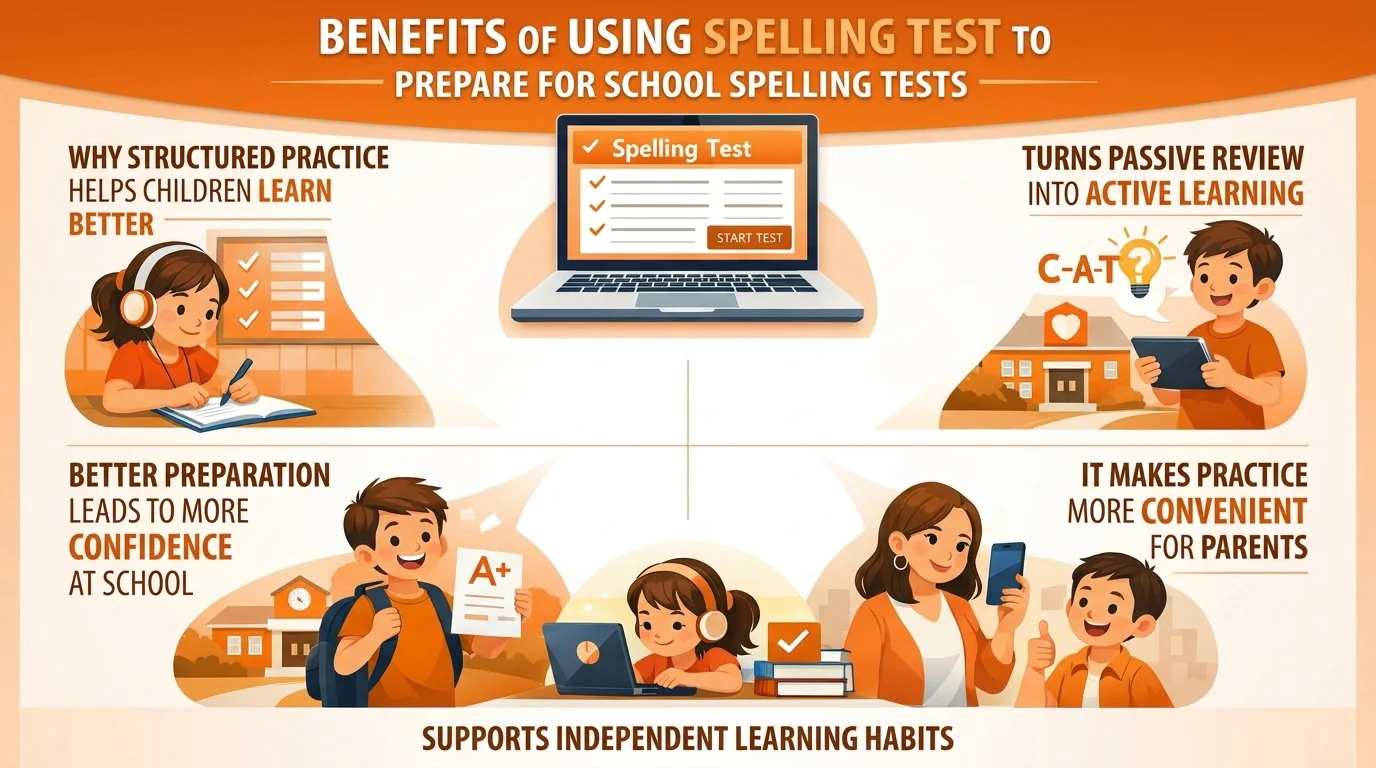
Why Structured Practice Helps Children Learn Better
One of the biggest advantages of using a dedicated spelling platform is that it turns spelling practice into a structured activity instead of an irregular guessing game. In many homes, spelling preparation happens only when someone remembers to do it, and even then it may involve reading a list out loud, covering the words, and hoping for the best.
With an online spelling test tool, practice becomes easier to repeat because the process is already set up. Students work through their words in a familiar way each time. That routine reduces friction. Instead of needing a parent to sit down with a pen and paper every session, a child can start independently or with minimal help.
Structured practice also helps children feel less overwhelmed. A long list of words on paper can look intimidating, especially for younger learners or students who doubt their spelling ability. When those same words are presented one at a time in a guided format, they feel manageable and achievable.
It Turns Passive Review into Active Learning
Passive review happens when a child simply reads over a word list several times without needing to retrieve the spelling from memory. It may feel like study, but it often creates a false sense of confidence because recognising a word is much easier than spelling it correctly from scratch.
Active learning is different: it asks the learner to listen, think, recall, and produce the answer. When students hear a word and then type it, they train retrieval pathways in a durable way. It also mirrors what happens in classroom spelling tests, where the student hears the word and writes it independently.
Better Preparation Leads to More Confidence at School
Confidence matters far more than many people realise. Children who walk into a spelling test feeling prepared tend to approach the task with a calm mind and better focus. Children who feel unprepared often second-guess themselves, rush, or panic on words they might actually know.
Confidence grows when children see evidence of improvement. When they practise a list several times and notice that they are getting more answers right, they begin to trust their own ability. That feeling carries into the classroom. Instead of seeing the weekly spelling test as something to fear, they see it as a challenge they can handle.
Immediate Feedback Helps Children Correct Mistakes Faster
Feedback is one of the most vital ingredients in learning, and timing is essential. When children make a spelling mistake and discover it immediately, they can compare what they wrote with the correct spelling. If days pass before a marked worksheet is returned, the learning moment is gone.
Spelling Test provides immediate feedback, allowing students to adjust straight away instead of repeating the same error. Many spelling mistakes follow identifiable patterns—such as omitting silent letters, confusing vowel digraphs, or reversing consonant blends. Immediate correction builds error awareness rapidly.
It Helps Reduce Test Anxiety
Some students become anxious before tests because they worry about getting words wrong in front of classmates or disappointing their teacher. Anxiety interferes with working memory and retrieval, meaning a child who knows their words at the kitchen table may underperform under classroom pressure.
Using Spelling Test as part of a regular weekly routine reduces this anxiety by making the test format familiar. The child experiences mistakes privately in a safe setting. Over time, the classroom test feels less threatening because it mirrors what they have already mastered many times at home.
Short Practice Sessions Often Work Better Than Long Ones
A frequent mistake with spelling revision is trying to do too much in one sitting. Long, grueling sessions lead to fatigue, tears, and resistance. Ten focused minutes spread across three or four days produce far superior recall than one rushed 45-minute cram session the night before.
"A simple routine done regularly is infinitely more effective than a perfect routine done only occasionally."
The Benefits Go Beyond the Next Test Score
While preparing for Friday's test is the immediate milestone, the true benefit of structured practice is long-term literacy confidence. Children who develop solid spelling foundations read with greater fluency, write with more expressive vocabulary, and approach learning with curiosity rather than dread. Also explore our guides for schools and educators to see how teachers implement cohort spelling diagnostics across Australian primary classrooms.